

‘Suffering is happening now’: the fight to cool India’s sweltering streets
New Delhi is an urban furnace, made hotter by its many dark surfaces. Greenery, ‘cool roofs’ and fewer air pollutants could offer relief
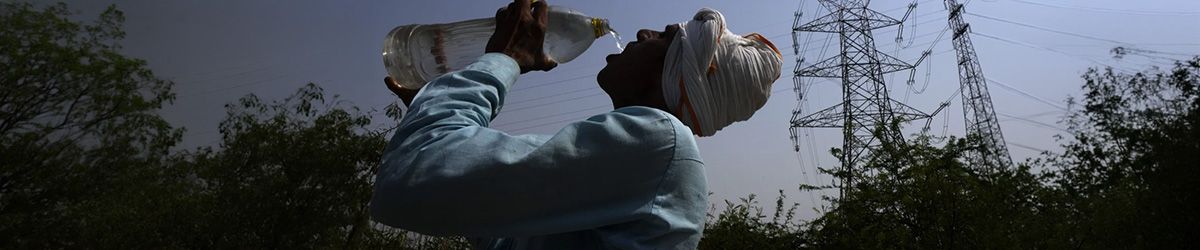
As the midday sun blazes over India’s capital, the rooftops shimmer like hot coals, radiating heat back into streets already gasping for relief.
Inside this urban furnace of concrete and asphalt, the air hangs heavy – not just because of rising global temperatures, but due to the very materials from which New Delhi is built.
The causes of this searing urban heat are complex, but some solutions are “surprisingly straightforward and urgently overlooked”, according to Kiff Gallagher, a climate strategist and founding executive director of the Global Heat Reduction Initiative.
“Rising heat in India is seriously affecting urban hotspots, like Delhi,” Gallagher said.
“Compared to surrounding communities, these dense urban areas, characterised by dark, heat-absorbing surfaces like asphalt and concrete, experience significantly higher temperatures.”
This phenomenon, known as the urban heat island effect, is exacerbated by climate change and pollution. But Gallagher insists that practical interventions – such as urban forests and reflective roofs – can offer meaningful relief.
“Reflective, or high-albedo, surfaces reflect more sunlight back into space, instead of being absorbed,” he said. “This offers near-term heat relief to cities like Delhi.”
Extreme heat and air pollution are two of Asia’s deadliest environmental threats, and Gallagher says the two often work in tandem.
“What has been confused a lot in the climate conversation is that only half of global warming is driven by carbon dioxide, and nearly half, pretty much the other half, is driven by short-lived climate pollutants,” he said, warning that current models often underestimate the impact of these potent, fast-acting pollutants.
Shorter-lived pollutants such as black carbon, methane and hydrofluorocarbons (HFCs) – the latter frequently used as refrigerants – can be up to thousands of times more potent than carbon dioxide in driving extreme heat, according to Gallagher.
For millions across South and Southeast Asia, improving air quality meant cutting emissions of these pollutants alongside carbon dioxide, he said.
"Suffering is happening now. It’s being experienced now, and we have to do something"
Kiff Gallagher, climate strategist
The Global Heat Reduction Initiative, which Gallagher leads, helps governments and businesses track and address these near-term climate threats. But despite the outsize role of short-lived pollutants – responsible for nearly half of global warming – only 5 per cent of climate finance is directed towards their mitigation.
While scientific consensus exists around the urgent need to remove carbon from the atmosphere, Gallagher is calling for a dramatic realignment of climate funding.
“We have to start channelling more climate finance into addressing that gap between the 5 per cent of funding and the 50 per cent of warming,” he said. “Suffering is happening now. It’s being experienced now, and we have to do something.”
Simple solutions
The solutions are often affordable and effective, according to Gallagher.
“Cool roofs” and surfaces that are treated to reflect sunlight can lower local temperatures by as much as 4 degrees Celsius (7.2 degrees Fahrenheit). “If you throw in planting urban forests, you can often lower the surface temperatures by up to 13 degrees Celsius in a city,” he said.
South Asia has long enjoyed natural cooling courtesy of the Himalayan mountain range, whose snow and ice reflect vast amounts of sunlight. But this is now itself under threat as soot and smog, borne aloft by winds, have darkened the pristine ice.
“So not only does it contaminate the water and then the sea levels rise, and then it adds to glacial melting and other things, but that it’s having this adverse heat effect as well,” Gallagher said.
Delhi’s air is routinely choked with a toxic blend of vehicular and industrial emissions, particularly in winter when it is compounded by the burning of crop residues in neighbouring states.
The consequences for public health are grave: premature deaths, respiratory illnesses and a host of other ailments. “There’s no ‘death certificate’ for air pollution … the crisis is silent, invisible and diffuse,” said Virinder Sharma, a technical member of Delhi’s Commission for Air Quality Management.
Achieving India’s National Clean Air Programme target of reducing particulate matter by 40 per cent in 131 cities by 2025- 26 could yield dramatic health benefits.
A recent study by the Indian Institute of Technology Delhi and the Climate Trends consultancy found that diabetes prevalence in high-burden states could fall by a quarter, hypertension by up to 12 per cent and children across the rice growing Indo-Gangetic plains would face lower rates of respiratory infections, anaemia and low birthweight.
“The central concern for air quality mitigation should be public health,” Climate Trends Director Aarti Khosla said. “Over the last 10 years, as air quality became more of a scientific issue and increasingly linked with aspects like climate change, it has somewhat moved away from its social dimension as a public health concern primarily.”
Agriculture itself is a major source of methane, particularly from rice paddies, which generate about 12 per cent of methane emissions from human activity due to their waterlogged, oxygen-poor conditions.
“You can reduce methane through alternate wetting and drying in the rice cultivation process, and also if you don’t do open burning,” Gallagher said. ‘So in agriculture, there’s an opportunity.”
Despite government efforts, farmers across northern India continue to burn crop residues at the end of the monsoon season, seeing it as the cheapest way to clear fields for the next sowing.
Methane emissions are also produced by livestock, especially cattle. But Gallagher said low-cost interventions were available, such as communally owned machines to break down manure in oxygen-free environments, generating biogas for cooking and reducing harmful emissions.
Other solutions include distributing solar lanterns and cleaner cookstoves to rural families who often rely on coal and wood, further poisoning the air.
“Many families are still using biomass for cooking and sometimes for heating in the winter months,” said Soumya Swaminathan, chair of the MS Swaminathan Research Foundation NGO based in Chennai. “This significantly contributes to outdoor air pollution, apart from being a direct risk to women and children.” Ultimately, Gallagher urged a more sophisticated approach to measuring and managing pollutants. Lowering heat in the near term was always preferable “to lower risks sooner and prevent catastrophe”, he said.
About SCS Global Services
SCS Global Services is an international leader in third-party environmental and sustainability verification, certification, auditing, testing, and standards development. Its programs span a cross-section of industries, recognizing achievements in climate mitigation, green building, product manufacturing, food and agriculture, forestry, consumer products, and more. Headquartered in San Francisco, California and celebrating over 40 years in business, SCS Global Services has representatives and affiliate offices throughout the Americas, Asia/Pacific, Europe, and Africa. Its broad network of auditors are experts in their fields, and the company is a trusted partner to companies, agencies, and advocacy organizations due to its dedication to quality and professionalism. SCS Global Services is a chartered Benefit Corporation, reflecting its commitment to socially and environmentally responsible business practices. SCS Global Services is also a Participant of the United Nations Global Compact and adheres to its principles-based approach to responsible business. For more information, visit www.SCSGlobalServices.com.